|
It is not because things are difficult that we do not dare; it is because we do not dare that things are difficult. — Seneca
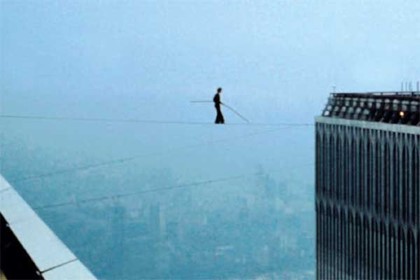
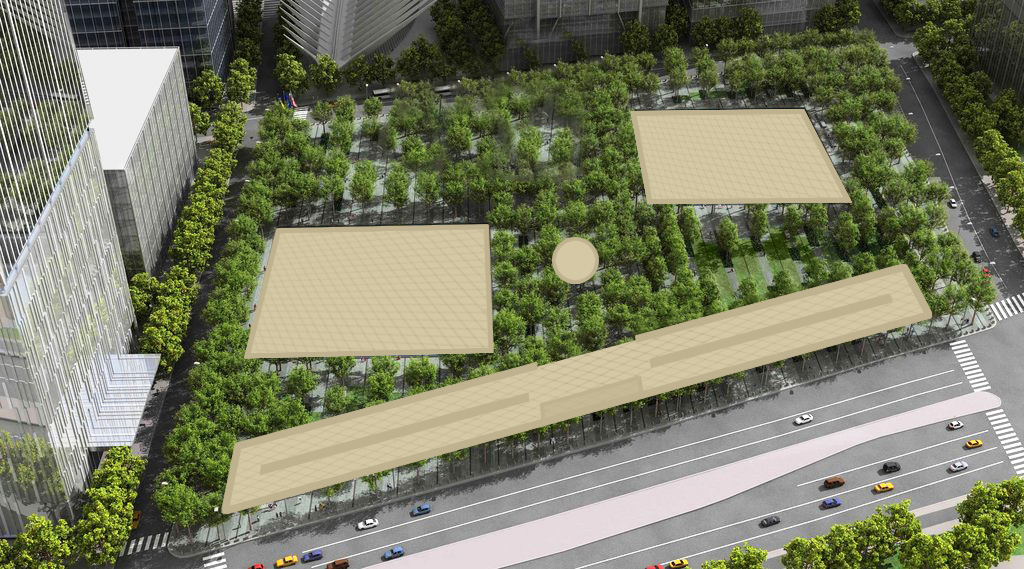
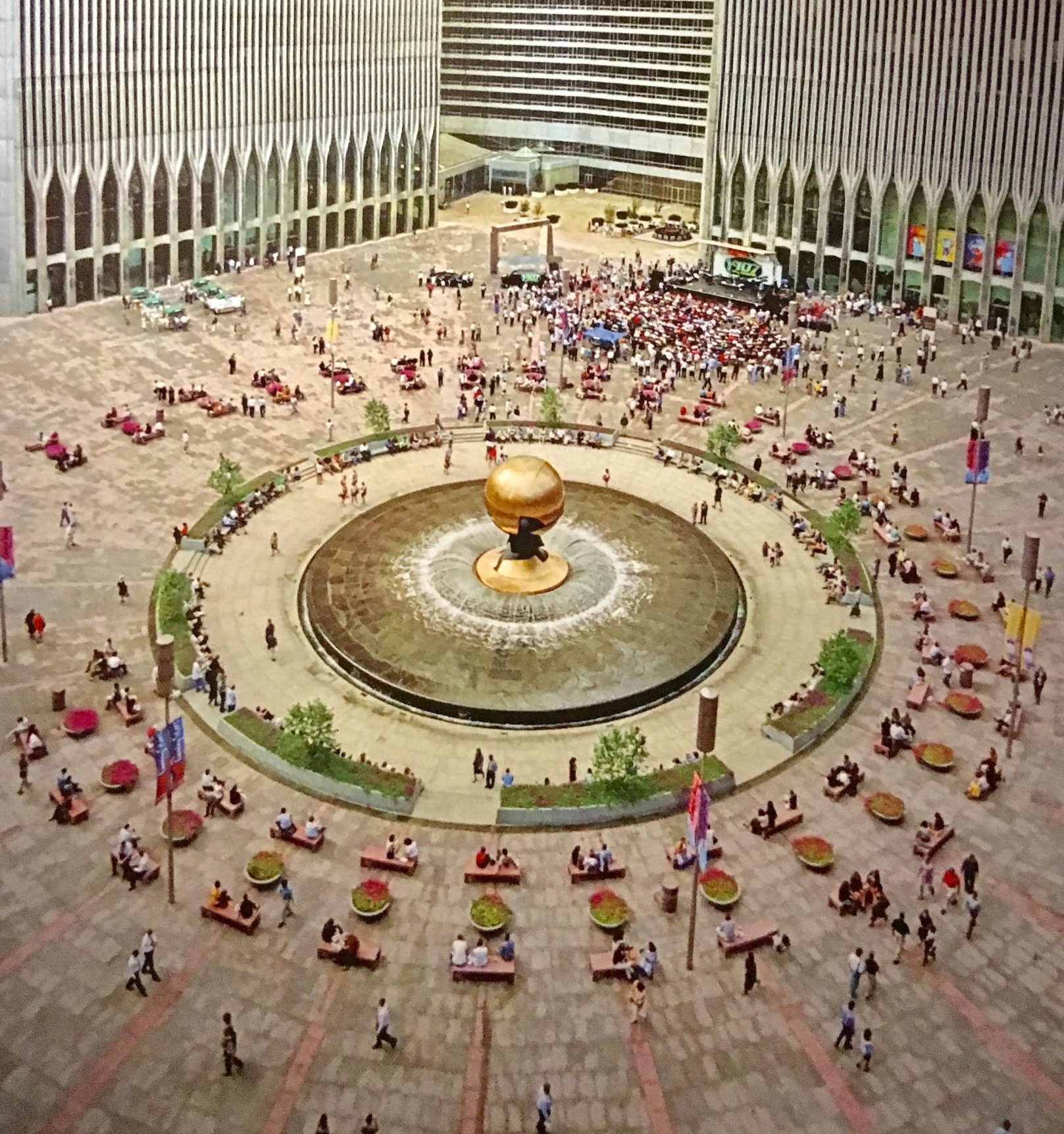
Developing | Updated on July 15, 2026 This plan is offered in the hope that it will kindle a communal resolve to reverse the global downward spiral that began on 9/11/2001. It has been developed over many years. Every angle has been analyzed and researched. It is above all a concept to encourage rethinking what is possible and how its implementation could start a hands-on reformation of our world. This proposal will refute the current chatter that the World Trade Center will finally be completed when the final Silverstein tower goes up. The Greenwich Street towers are merely the backdrop for the real World Trade Center. One of the important keys to the plan is that it would greatly enhance the elements of the site that are there today. Nothing would be removed except the dystopian Snohetta Pavilion, while the functions in two maintenance sheds would be relocated. Far from being a drain on a struggling city, it would be the greatest visitor draw imaginable. Even though there are already towers taller than 2000 feet in other countries, with ever taller towers sure to follow, the Twin Towers of the World Trade Center would always be the most celebrated towers on Earth. When the outline below is finished, it will be printed and sent to the President, leaders in Congress, and the media — to bring to the attention of the American People and friends around the world. ☙ A PLAN TO COMPLETE THE WORLD TRADE CENTER ❧ A 9/11 MEMORIAL that fully honors the innocent victims, the courageous responders, and the whole world that died on September 11, 2001, was the organizing principle of this plan. Twin Towers rising from their footprints is an organic part of that Memorial, but just a part of the tribute. The underlying flaw in the current site plan was making the 8 acres in the center a hybrid. The idea that a solemn memorial could be part of a “campus” is bizarre. This plan celebrates the commercial and cultural activities taking place on the eastern part of the quadrant — to the fullest — and creates a sacred place for remembrance on the western part. The bronze parapets (maintaining the meaningful adjacencies) would stretch along West Street, from Liberty to Fulton Streets, on either side of a central Tomb of the Unknowns, forming a solemn precinct — as it is The flags of every nation that lost a citizen would line the perimeter of the site. And on the outside of the two entrance walls into the precinct would be inscribed the expanding list of names (with ranks) of every one who has fallen as a result of their valorous service on 9/11 and/or their work to remove the infernal “Pile” of destruction. THE 9/11 MUSEUM would be moved to the cavernous base of the Freedom Tower. That would be in keeping with the tower’s obelisk shape — an international funereal element — rising at One World Trade Center. Standing beside the new memorial, with the unidentified remains lying in repose, the victims’ names flanking the tomb on either side, the flags flying, and the Eternal Flame bearing constant witness, the symbolism becomes entirely fitting and uplifting. As the new home to the 9/11 Museum, the exhibits would be transferred from their underground location to a similar space behind the concrete base. The observatory, dedicated as a 9/11 Hall of Heroes, would include meeting rooms, exhibition and auditorium spaces, and a private space for victims’ loved ones to look down on the dignified Memorial and find peace. And the elevator panorama would be changed to reflect a celebration of Freedom through Americans’ 250 years of sacrifice since 1776. THE KOENIG SPHERE would stand at the entrance to the solemn precinct. It would revolve on a scaled down version of its original fountain base and the pavement leading to the Memorial precinct would be changed to the golden paving stones that originally surrounded it. German artist Fritz Koenig was commissioned to cerate a sculpture dedicated to World Peace through World Trade. It sat in the center of a 90-foot wide fountain in the plaza between the Towers and rotated once every 24 hours. It was the only WTC structure to miraculously survive the destruction and was later rehabilitated as much as it could be by its creator. There was great popular support for returning it to the Plaza, where it would have been an inspiring icon of the American spirit of overcoming. But it was too authentic for the corporate rebuilding agenda to permit. After years of tireless lobbying to “Save The Sphere” by 9/11 Family Member Michael Burke, it was located across the street in Liberty Park. An important dividend of placing The Sphere at the entrance of the Memorial grounds is that “America’s Response Monument” — also known as the Horse Soldier Monument — would move into the Sphere’s current spot overlooking the WTC site. The stirring statue of a Green Beret riding a horse on rocky Afghanistan terrain would take on the powerfully inspiring profile it deserves and actually make it a very meaningful part of the Memorial itself. The entire project was aimed at making THE PLAZA attractive to commercial tenants instead of authentic and stirring. It is not uplifting because it was not meant to be. That perverse incentive is evident in the Port Authority’s marketing use of the word “campus” when referring to a site where thousands of people were savagely murdered — as if it were just another Silicon Valley corporate spread. With a noble 9/11 Memorial concentrated at the west end of the site and the 9/11 Museum right next to it, the sprawling ill-defined quality of the current Memorial will make way for legitimate places of celebration and recreation. Umbrellaed tables opposite the Oculus would be popular gathering places before heading into the Performing Arts complex or back to work in the WTC offices. Open-air events could include concerts, movies, seasonal pop-up shops, and even a winter rink. THE TWIN TOWERS would rise two thousand feet above their footprints and soar over Lower Manhattan as the original towers once did. They would be the first megatall towers in our hemisphere and feature two of the tallest outdoor rooftop decks in the world. (At this time, they would be the tallest.) They would be golden to represent their original dedication as “a monument to world peace” and to the Golden Rule as humanity’s North Star. Or they could retain the original silver façade with golden tracing added to symbolize the alchemy that transforming the World Trade Center could have on the future of America and the world. We envision towers that would fill the original footprints, which could be done without crowding the site or disturbing the infrastructure below. We don’t pretend to know the structural requirements of building that high, but we are sure that by employing the supremely confident, creative, and resolute spirit that built the originals and the advanced technology of today it can be done. The Twin Towers were heroic architecture, the epitome of a daring, confident culture. Only greater Twin Towers could ever live up to the indelible imprint they made on our world. THE ROOFTOPS of both Towers would be open-air public spaces while the 1776 beacon would flash above the Freedom Tower. Additional broadcast transmission could be inserted below the Twins’ rooflines. A Port Authority ad in the 1980s for the rooftop observation deck cautioned: “And after dark, please don’t touch the stars.” That epitomized the Towers’ allure. And there is nothing in the city or country or world today that can come close to that appeal. Visitors to the original Towers will remember their disappointment when bad weather meant that a “Roof Closed” sign stretch across the Observatory escalator to the roofdeck. No matter how high, an indoor observatory is definitely a consolation prize. With two rooftops for the public to enjoy, one could be part of the restaurant and catering functions in Tower One and the other the “Top of the World” observatory and cafe in Tower Two. The highest public open-air observation deck is currently at 1,840 ft. at the the top of the Clock Tower in Makkah, Saudi Arabia. But even when the Twin Tops are surpassed as the highest outdoor decks on earth, they would surely continue to be the most spectacular. THE BELLS were the central feature of a very imaginative memorial that was being planned in Texas around 2008. The “World Memorial” organization reached out to Ken Gardner of Twin Towers II to suggest blending their ideas for a memorial with the Belton-Gardner plan. What was most memorable about the “World Memorial”, which was founded by American Airlines pilot Brus Messenger and Firefighter Mitch Mendler, was that it included the largest carillon in the world. The idea of a full carillon suspended between the flagpoles, chiming every hour, when the birthday roses are placed, or when a name is added to the outer wall, adds a dimension to the Memorial that would be lovely and moving. THE FUNDING is the keystone of the proposal. If it is not viable, neither is the plan. But we are very confident that when it is revealed it will open a lot of eyes. It is the last thing we will post before distribution. THE [American] DREAM means many things to many people. But its oldest and truest application is the one that aspires people to greatness. Carl Sandburg wrote: “The Republic is a dream. Nothing happens unless first a dream.” And, “Dream No Small Dreams” was the byword of the man who spearheaded the World Trade Center project in 1962, Executive Director of the Port Authority Austin J. Tobin. He may have been thinking of the words of Daniel Burnham, the Chicago architect and urban planner who designed the Flatiron Building and was instrumental in the development of the skyscraper: “Make no little plans. They have no magic to stir men’s blood…” — or of the better known quote of German Poet/Philosopher/Statesman Goethe: “Dream no small dreams, for they have no power to move the hearts of men.” But in any case, they were the words that built the Twin Towers. On the 50th anniversary of their formal opening the TTA posted: “On this Golden Anniversary of the World Trade Center’s opening on April 4, 1973, we affirm our belief in its founding vision as ‘a living symbol of man’s dedication to world peace… a representation of man’s belief in humanity, his need for individual dignity, his belief in the cooperation of men, and, through cooperation, his ability to find greatness.’ We believe in the dream of a Golden Age of Brotherhood and our faith is strong that restoring the Twin Towers’ transcendent presence in the world’s skyline would be a triumph for humanity and the surest way to a better world.” And so we do. When Philippe Petit, an early signer of the TTA petition, spent almost an hour dancing on a wire between the Twin Towers in 1974, he epitomized the courage and joy that dreaming-no-small-dreams requires and inspires. What many might call a death wish, he calls “a life wish.” When Mr. Petit accepted an award at the 2008 Sundance Festival ceremonies for his work on “Man on Wire,” he urged everyone to: “keep moving mountains, keep growing wings, keep dreaming…” “LET IT BEGIN HERE” was the command of the Minutemen’s captain in 1775 on the Lexington Green. And, the quintessential quote of Robert F. Kennedy that so inspired his supporters and generations to come was another way of saying the same thing: “Some men see things as they are and say, ‘Why?’ I dream things that never were and say, ‘Why not?'” That captured the best of the 1960s zeitgeist. That Sixties idealism was siphoned into so many destructive pursuits — but the humanitarian concept behind the Twin Towers was one of the spectacular exceptions. Now that our society is older and wiser, we can channel so much of today’s misplaced idealism into making the Twin Towers of the World Trade Center the pinnacle of goodwill for the planet… Peace on Earth is the dream of the ages. The Golden Rule is a matter of choosing a higher standard. It has to start somewhere. Let it begin here — where the worst hatred was met with the greatest love. When completed, the outline above will convey the entire scope of what is being proposed. But an expanding number of details and documentation may be added to the topics below. THE MEMORIAL || THE MUSEUM || THE SPHERE || THE PLAZA || THE TWIN TOWERS THE ROOFTOPS || THE BELLS || THE FUNDING || THE DREAM || LET IT BEGIN HERE   
|